

Rogue Macro | Sept 29, 2026
Independent macro research for investors and critical thinkers.
Rogue Macro openly examines the structural and often hidden forces in economics, biology, demographics, energy, geography, and history that drive markets and shape the future.
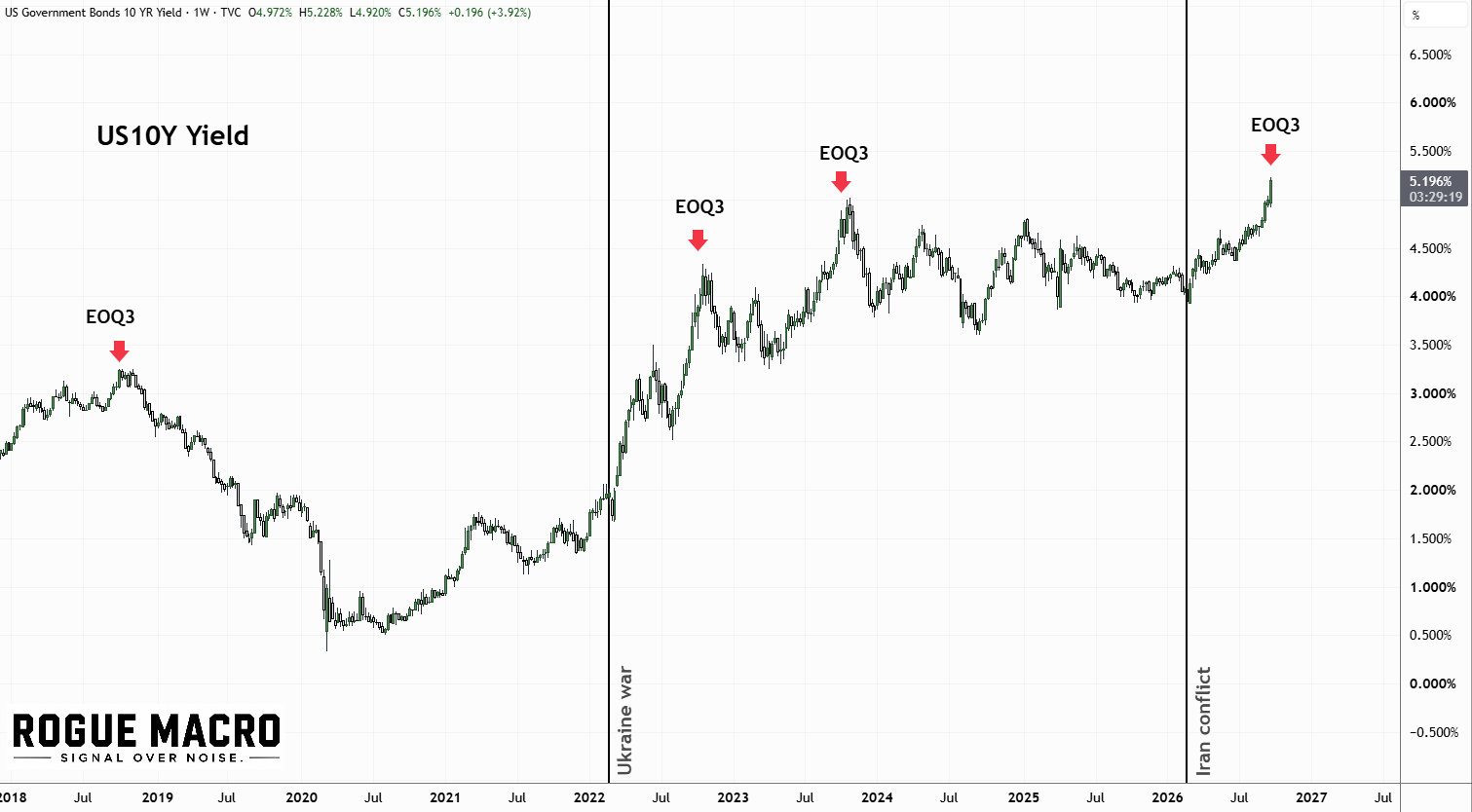
Over the last several weeks, US yields have surged (I’ve written about them here and here) with the 10-year pushing to levels not seen in decades. At the same time, much more quietly, the dollar is marching higher. These two moves are related, and together they are creating a rapidly tightening financial environment even without the Fed doing anything.
Dollar And Yields Rising Together
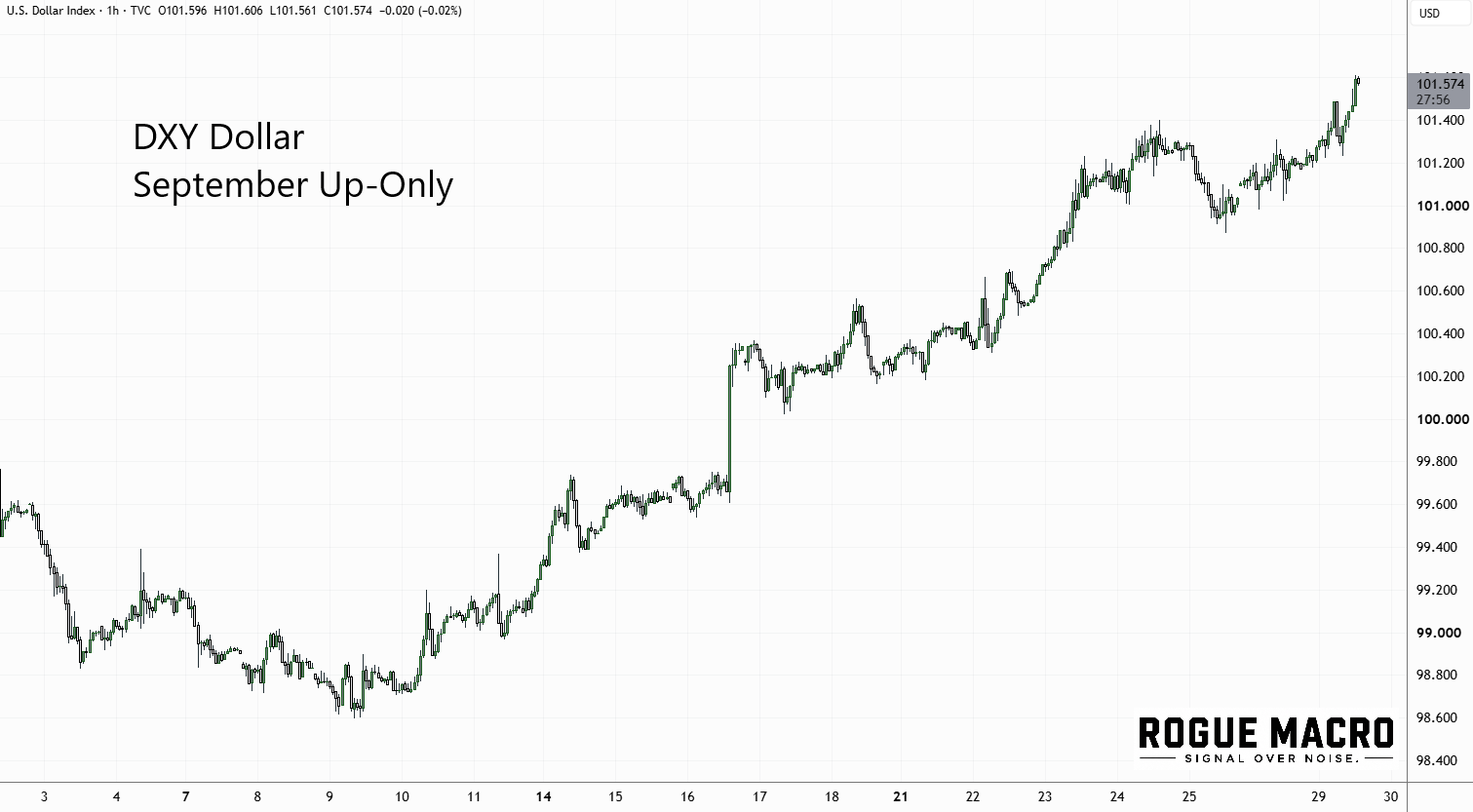
The hourly chart is straight up and to the left for all of September, and shows a relatively orderly advance.
As US yields move higher, they make dollar assets relatively more attractive, while also increasing funding pressure throughout the dollar-based financial system. That combination can become self-reinforcing for a time: yields rise, capital moves toward dollars, the dollar strengthens, and financial conditions outside the United States tighten.
This is the Eurodollar dollar shortage, that can then create recessionary pressure on yields to come down.
DXY Is on the Verge of a Major Breakout
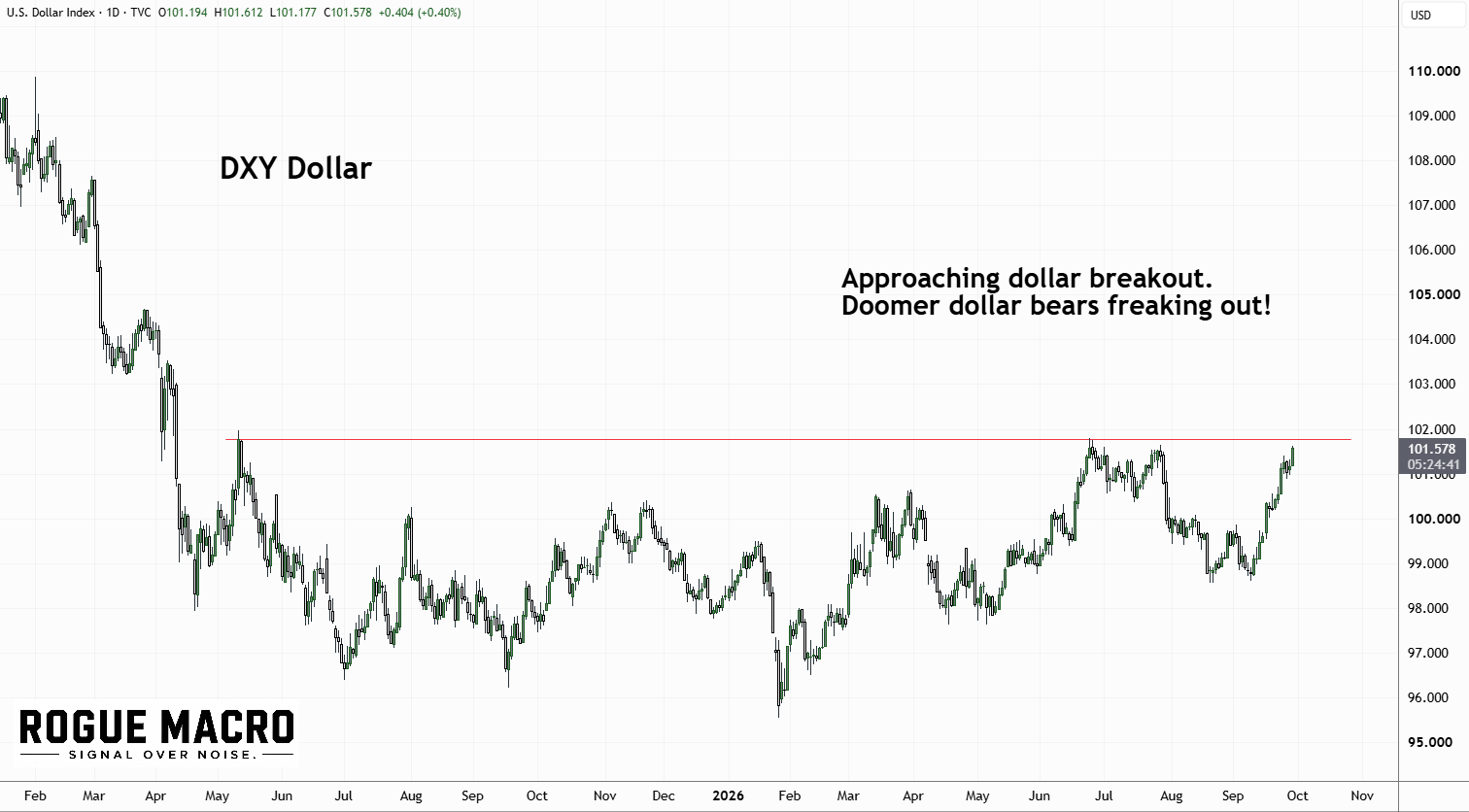
The daily chart shows why I’m paying so much attention.
The dollar has pushed into roughly 18-month highs and is now threatening a major breakout. If it clears this resistance convincingly, there isn’t an obvious technical stopping point immediately above it.
That is where the possibility of another dollar wrecking ball starts to become important. Dollar strength tightens global financial conditions, pressures dollar borrowers, weighs on commodities priced in dollars, and can force foreign central banks to respond to strengthen their currencies even when their domestic economies would prefer easier policy.
The Dollar Wrecking Ball Setup
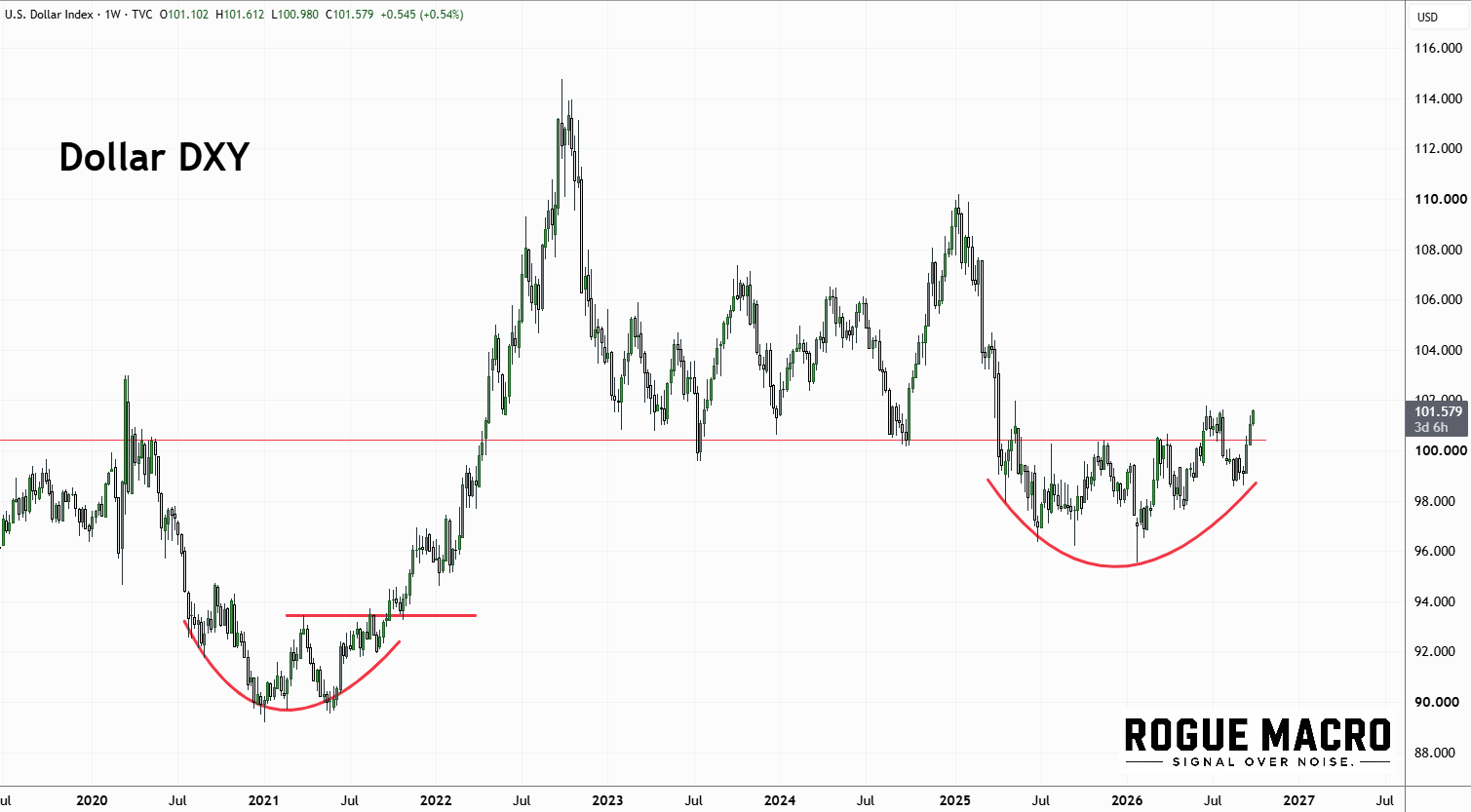
The weekly chart makes the setup even more striking.
The dollar has spent a long time carving out a large rounded bottom that looks remarkably similar to the structure preceding the 2021–2022 dollar wrecking ball.
That does not mean the outcome has to be identical, though a big part of my macro thesis is a strengthening dollar. I’ve been waiting for 2+ years for the dollar to continue back to recent highs and beyond. It doesn’t have to happen immediately, but the global macro pressure is for a stronger dollar relative to global currencies, not relative to assets. Asset prices should continue to increase.
Foreign governments and businesses have a lot of dollar denominated debt. They tend to borrow in dollars, because the USD is accepted more widely than their home currency, and the US is the only net importer of consequence in the world. It pays for its $1T deficit with USD. Despite that most of foreign business is internal to their own country. So, they borrow in dollars and make revenues in their own currency.
The 10-year yield might be the spark, but the dollar could become the wrecking ball.
Is This Really Global Dollar Strength?
There is one major caveat to the dollar wrecking-ball thesis right now: the strength is not yet particularly broad.
DXY is heavily weighted toward developed-market currencies, especially the euro and Japanese yen. That means a large move in EURUSD or USDJPY can make the dollar index look much stronger than the dollar actually is against the rest of the world.
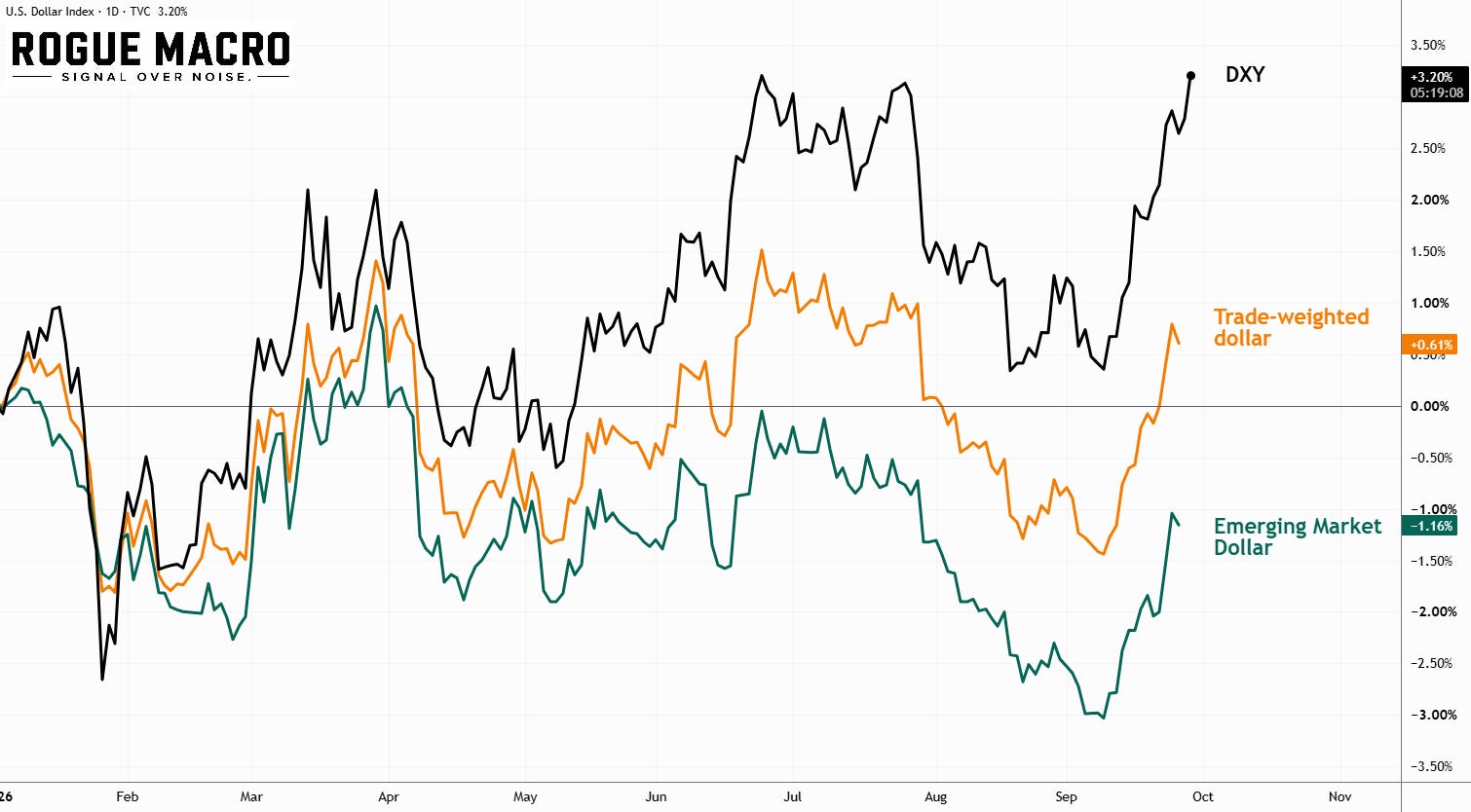
The trade-weighted dollar tells a broader story because it includes currencies from major US trading partners, importantly the Chinese yuan and Mexican peso. Emerging-market dollar indexes give us another perspective by showing whether dollar strength is spreading into the countries most vulnerable to tightening global dollar conditions.
So far, those broader measures have not confirmed the dramatic move in DXY.
Therefore, right now, this looks like a relative interest-rate and developed-market currency move more than a global dollar shortage or global growth panic. US yields are rising relative to other major economies, while the euro and yen are absorbing much of the adjustment.
In other words, the wrecking ball is swinging, but it hasn’t hit the emerging markets yet.
That is actually what makes this chart so useful. If the trade-weighted dollar and emerging-market dollar indexes begin breaking higher alongside DXY, the character of the move changes. At that point, I would become much more concerned that we are moving from an FX repricing into a genuine global financial tightening event.
What Happens If the Dollar Breaks Out?
For the moment, the surge appears concentrated in DXY, with some early signs of spreading into trade partners and emerging markets.
The technical setup is dangerous. DXY is sitting at a major breakout level after forming a large rounded bottom reminiscent of 2021. If it breaks higher and the move begins spreading into the trade-weighted and emerging-market indexes, the consequences will reach far beyond foreign exchange.
The recent Treasury sell-off has gotten everyone’s attention. The next phase could be a flip of fast money into US treasuries and the dollar. This is also extremely interesting given the end of Q3, where yields tend to peak.
ROGUE MACRO - Signal over noise. Predictive power over ideology.
If you find this analysis useful, make sure to follow us everywhere!
Telegram community: https://t.me/+zBijvB3CxyA2OTYx
YouTube: https://youtube.com/@RogueMacro
Podcast (audio-only): shorturl.at/5WBrm
or in your podcast app